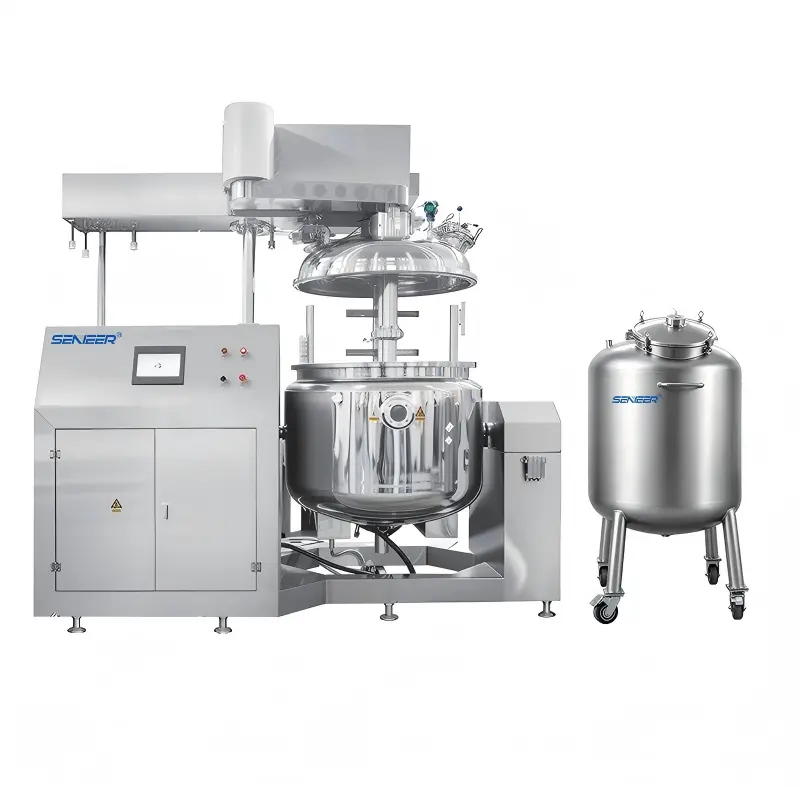
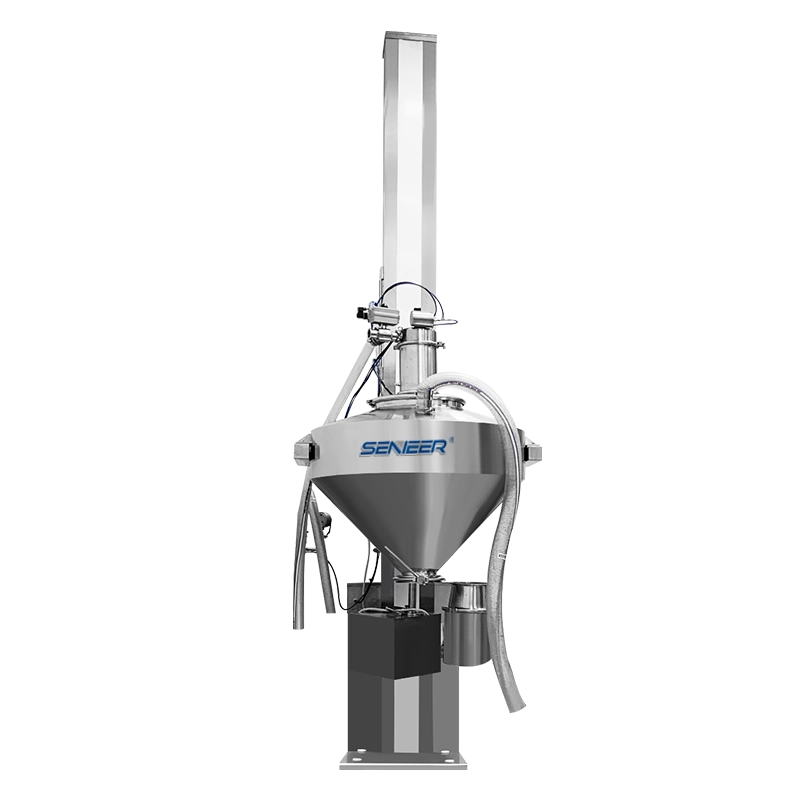
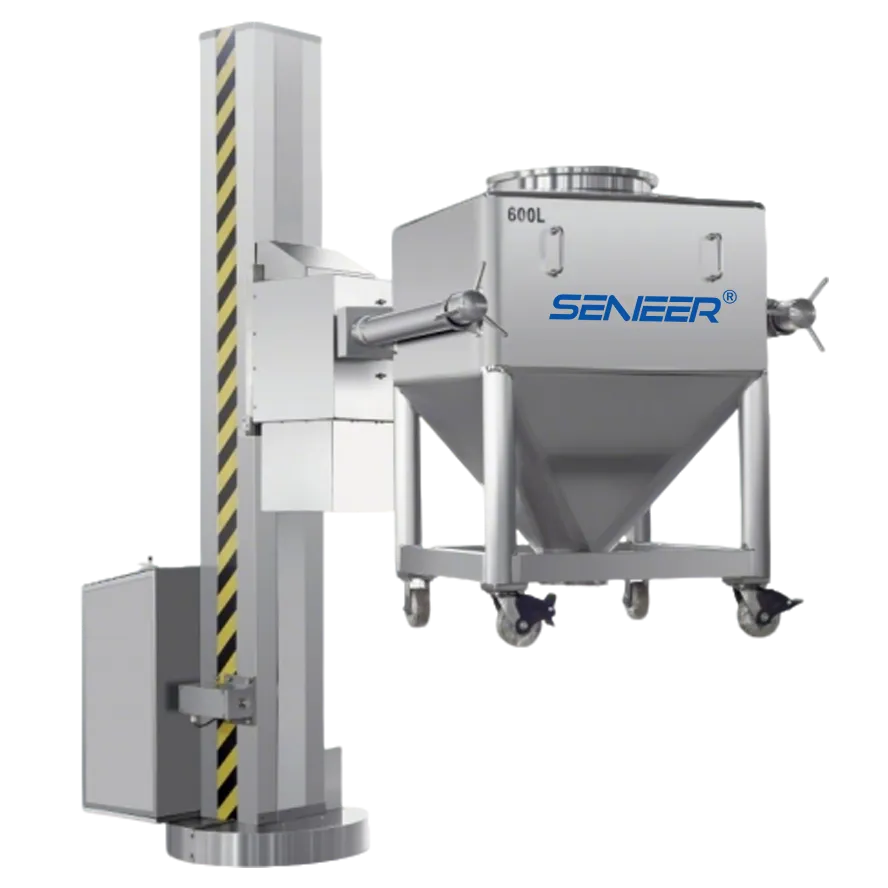
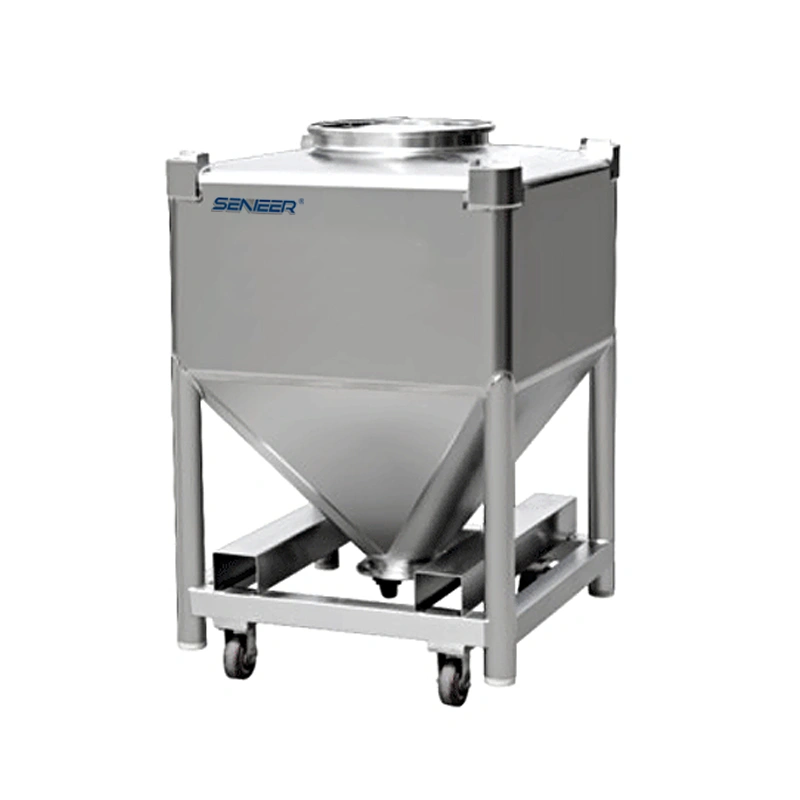
Tilt-to-Discharge
The vessel discharges its contents using a hydraulic lifting and tilting mechanism.
Basic process → Lift the vessel → Open the lid → Tilt the vessel → Pour out the material directly.
Advantages: Intuitive structure and simple operation.
However, if high-viscosity material needs to be transferred to a higher elevation, the efficiency and suitability of the tilting method are limited.
Pressure Discharge
Where permitted by the vessel design and process requirements, filtered compressed air can be used to assist discharge.
After sealing the vessel, filtered compressed air is used to pressurize the interior; the bottom discharge valve is then opened to force the material out.
Advantages:
No additional transfer pump required
Relatively simple discharge structure.
Disadvantages:
Limited transfer height.
Especially with high-viscosity ointments, pressure transfer capability decreases as the transfer height increases, potentially failing to meet discharge requirements.
Rotary Pump Discharge
For high-viscosity ointments, if the requirements include:
- Rapid discharge
- Transfer to a higher elevation
- Connection to filling equipment
- Reduced manual labor
- Increased production efficiency
then configuring a rotary pump is recommended.
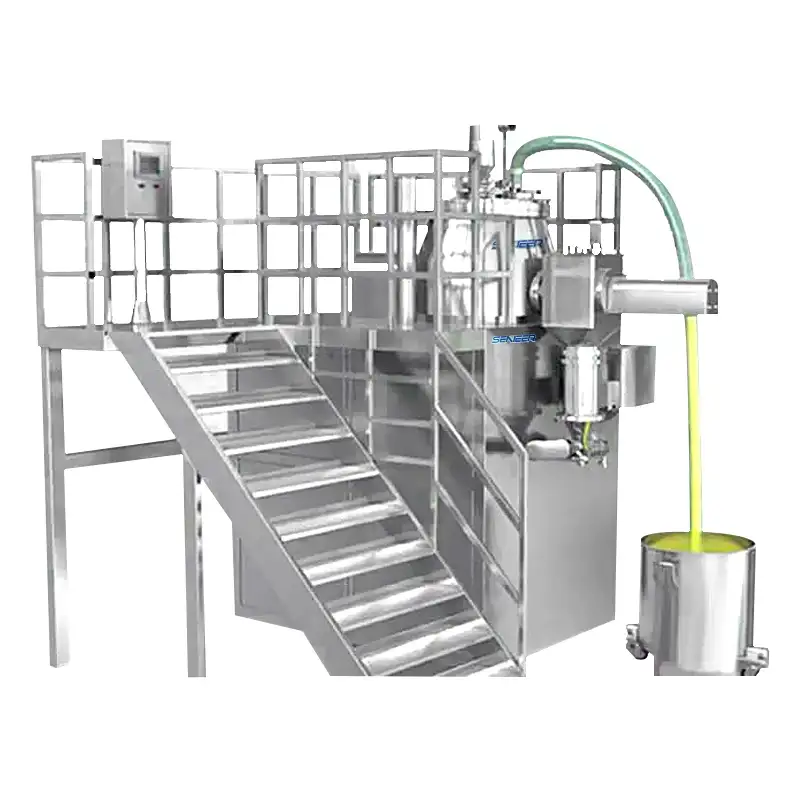
Compared to slow manual extrusion, using a rotary pump significantly improves discharge efficiency, reduces waiting times, and prevents bottlenecks in downstream production.