







Choosing a tube sealing method starts with the tube structure—not with a machine label.
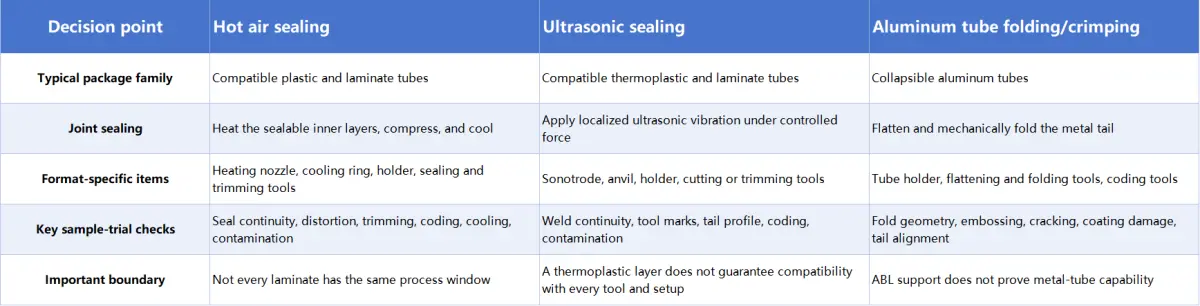
Hot air and ultrasonic systems create sealed plastic layers, suitable for plastic tubes / PBL tubes and ABL laminated tubes, while a collapsible aluminum tube is normally closed by mechanical folding or crimping. These are different processes, and they require different tooling, settings, and acceptance checks.
This distinction matters when buyers compare tube filling and sealing machines. An aluminum barrier laminate (ABL) tube contains an aluminum foil barrier inside a multilayer structure; it is not the same package as a metal aluminum tube.
Chapter1:How Hot Air Tube Sealing Works?
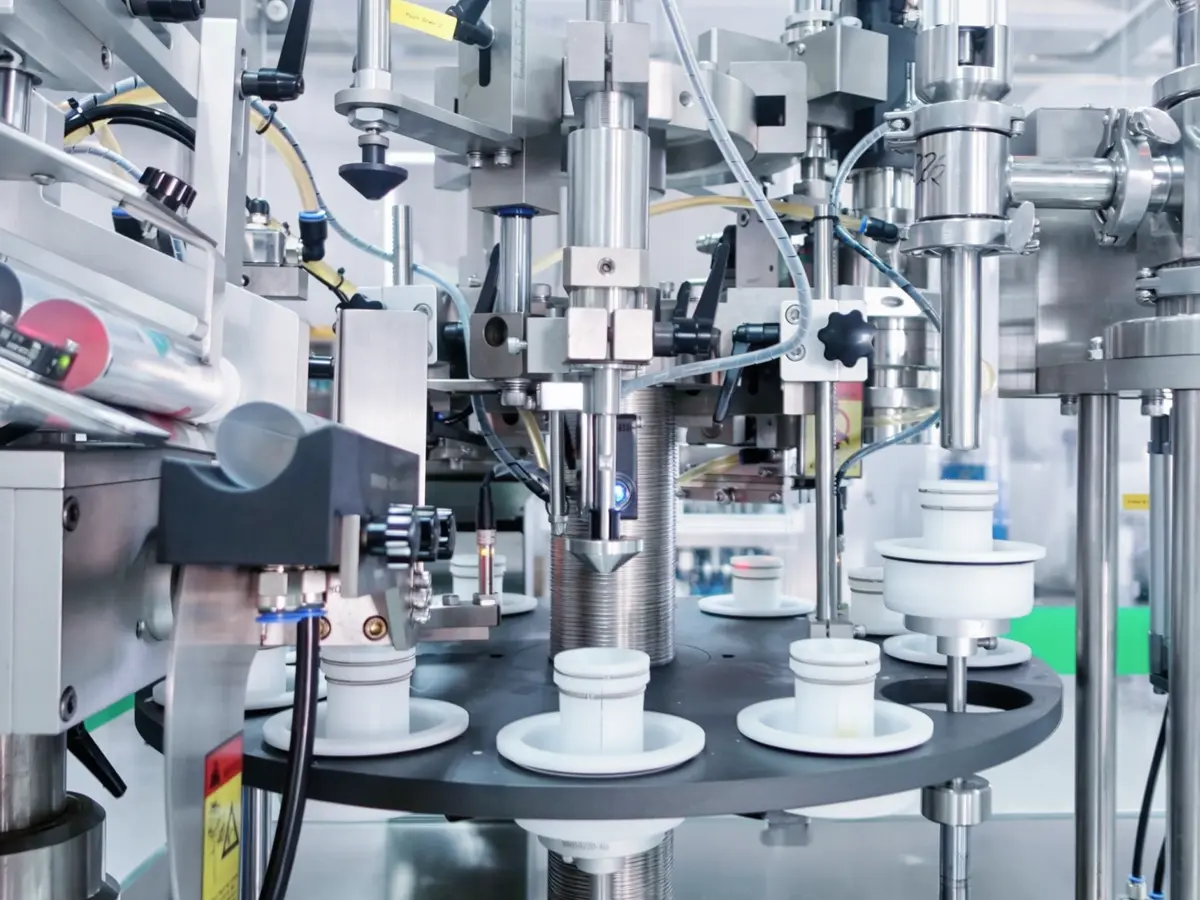
In a typical hot air process, heated air is directed at the inside of the open tube tail. The heat softens the sealable inner layers. The tube is then compressed by closing tools, cooled, trimmed and coded.
Hot air is worth evaluating when the tube supplier confirms a heat-sealable structure, the tools can produce the required tail and code, and a trial shows an acceptable seal without distortion, pinholes, weak areas, or contamination.
Do not specify one universal temperature, airflow, or cooling time for all tubes. Tube resin, laminate construction, wall thickness, diameter, decoration, tail geometry, and line conditions can change the usable process window. Ask the machine supplier and tube supplier to review the same tube drawing and physical samples.
Chapter 2:How Ultrasonic Tube Sealing Works?
Ultrasonic sealing uses high-frequency mechanical vibration at the tool interface. The vibration generates localized softening in compatible thermoplastic layers while the tube tail is held between the sonotrode and anvil. The joint forms under controlled energy, force, and time rather than by blowing hot air into the tube.
Ultrasonic sealing is worth evaluating when the tube has a compatible thermoplastic layer, the sonotrode and anvil compress the tail profile, and a trial shows acceptable results without damage to decoration or the barrier structure.
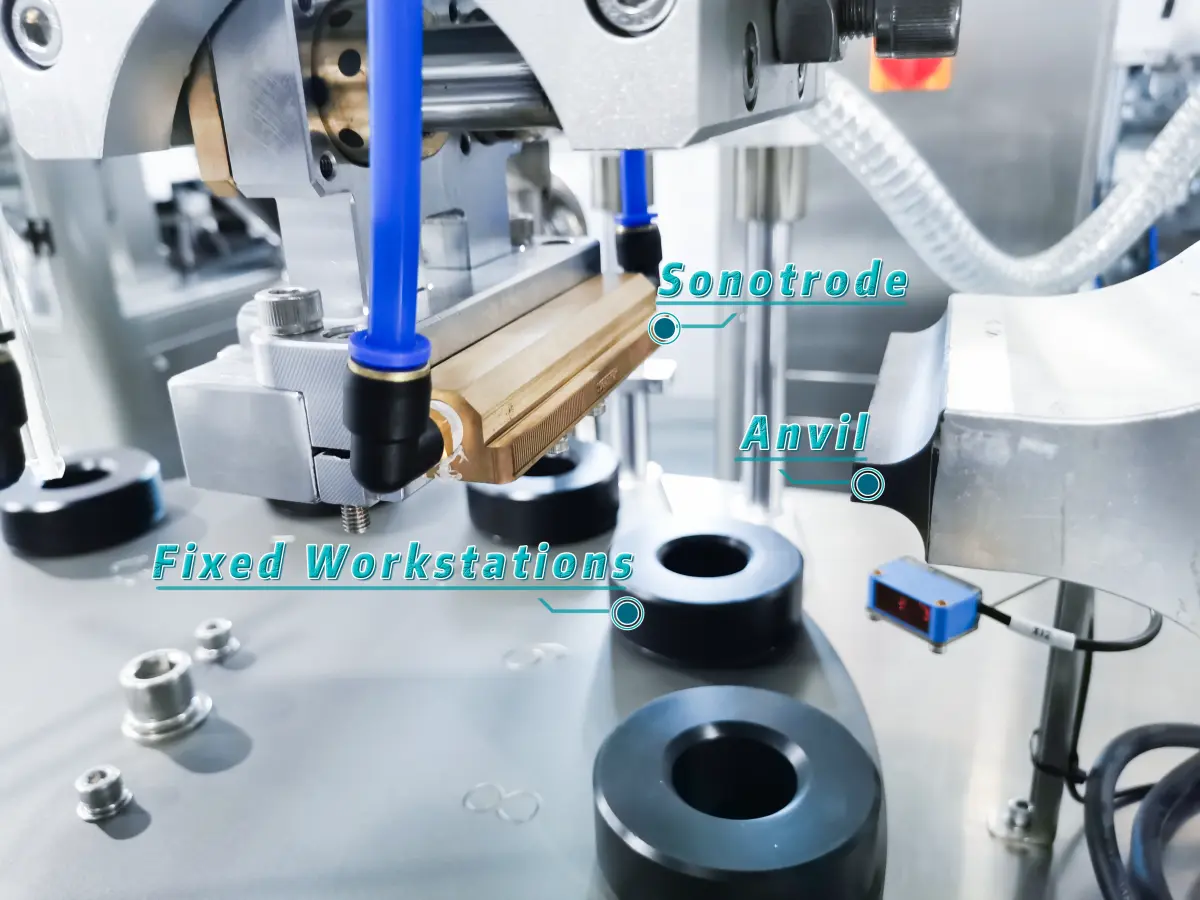
SENIEER currently presents ultrasonic sealing for plastic and ABL tubes on its STF product page. It can be seamlessly integrated into our existing tube filling and sealing production lines, delivering consistent sealing performance that meets food, pharmaceutical and cosmetic industry hygiene and safety standards.
Chapter 3:How Aluminum Tube Crimping and Folding Works
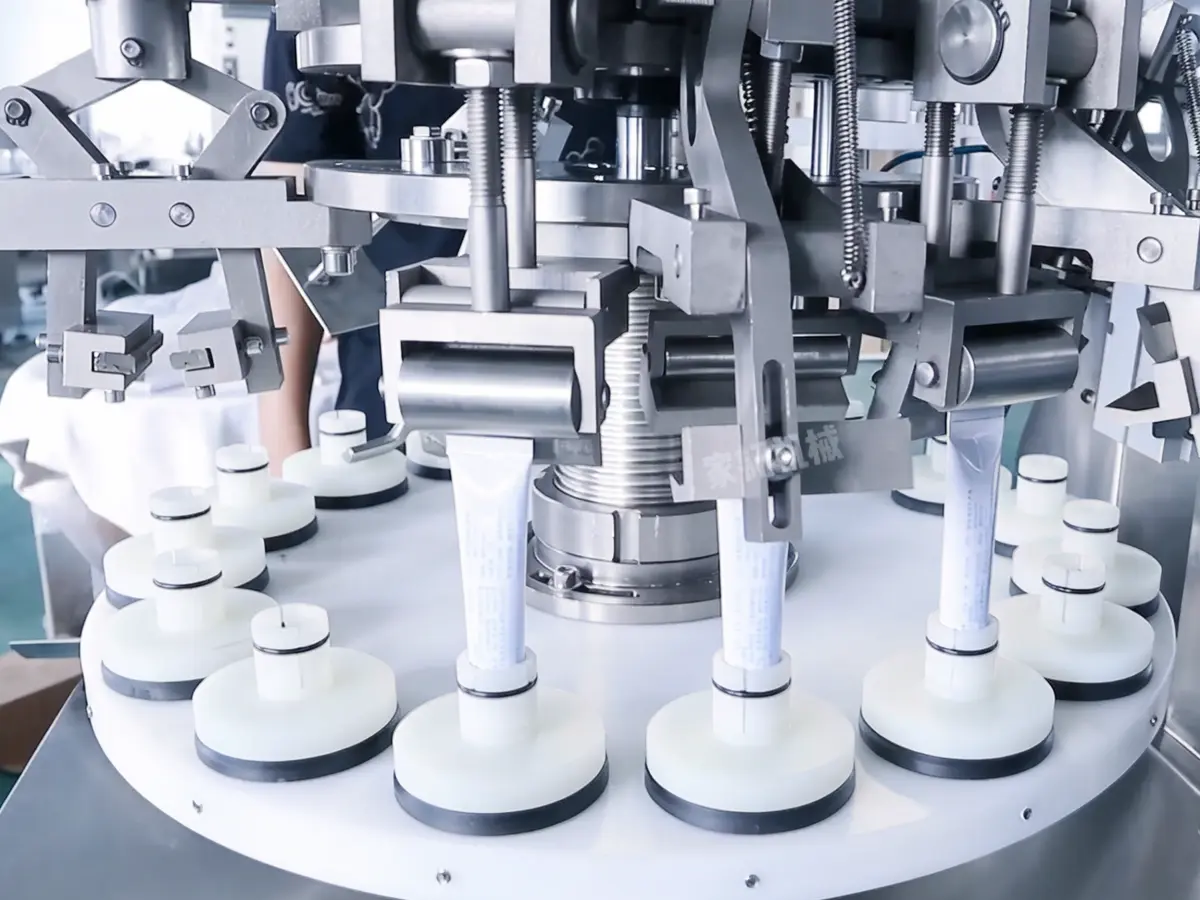
A collapsible aluminum tube has no meltable plastic inner layer, so it cannot be sealed by hot air or ultrasonic welding.
After filling, the open metal end is flattened and folded mechanically. Depending on the set closure, the tooling may form one or more folds and emboss a batch or date code.
Chapter 4:Hot Air vs. Ultrasonic vs. Metal Folding
Chapter 5:A Practical Selection Process?
1. Identify the exact tube construction
Obtain a current drawing and material declaration from the tube supplier. Record whether the tube is plastic, PBL, ABL, or collapsible aluminum. Include diameter, overall length, tail allowance, wall or laminate specification, cap, decoration, and registration mark.
2. Define the finished tail
Provide an approved sample showing the required tail, trim, code, and downstream constraints. Appearance alone is insufficient if the closure fails the agreed integrity test or secondary package.
3. Confirm the quoted configuration
Ask the supplier to identify the closure principle, tooling for every format, utilities, coding equipment, trimming method, and change parts.
4. Run a representative trial
Use tubes, caps, and product from production-intended sources. Record sample identity, product temperature, fill quantity, machine settings, run duration, total output, rejects, and interruptions. Evaluate fill quantity and closure performance in the same run because splashing or stringing during filling can contaminate the seal area.
Suggestions from SENIEER
The safest sequence is tube construction first, closure method second, and machine configuration third. Hot air, ultrasonic sealing, and metal folding can each be appropriate within the right application, but none should be approved from a generic machine title alone.
To discuss a project withSENIEER, share your tube drawing, material structure, product information, target fill, required tail appearance, and representative samples. SENIEER can then discuss a proposed configuration and trial plan; final suitability should be confirmed against the agreed samples and acceptance criteria.