1.Target Particle Size and Stability
To meet diverse crushing requirements, we recommend selecting the appropriate model to effectively reduce production costs and enhance efficiency. Below are the particle size ranges of three mainstream crushers for quick selection guidance:
Hammer crusher: 100 μm – 5 mm;
Pin crusher: 50 – 300 μm;
Jet mill: 5 – 100 μm.
For any selection inquiries, our technical experts are available to provide precise solutions.Understand Your Material Before Choosing the Machine
2.Consider Heat Sensitivity & Product Integrity
You don’t have to worry about this problem at all. The jet mill uses airflow grinding, no grinding medium, and the temperature rise is extremely small, which will not affect the active ingredients in the material.
3.Select the Right Jet Mill Type for Your Application- Sprial jet mill vs Fluid bed opposed jet mill
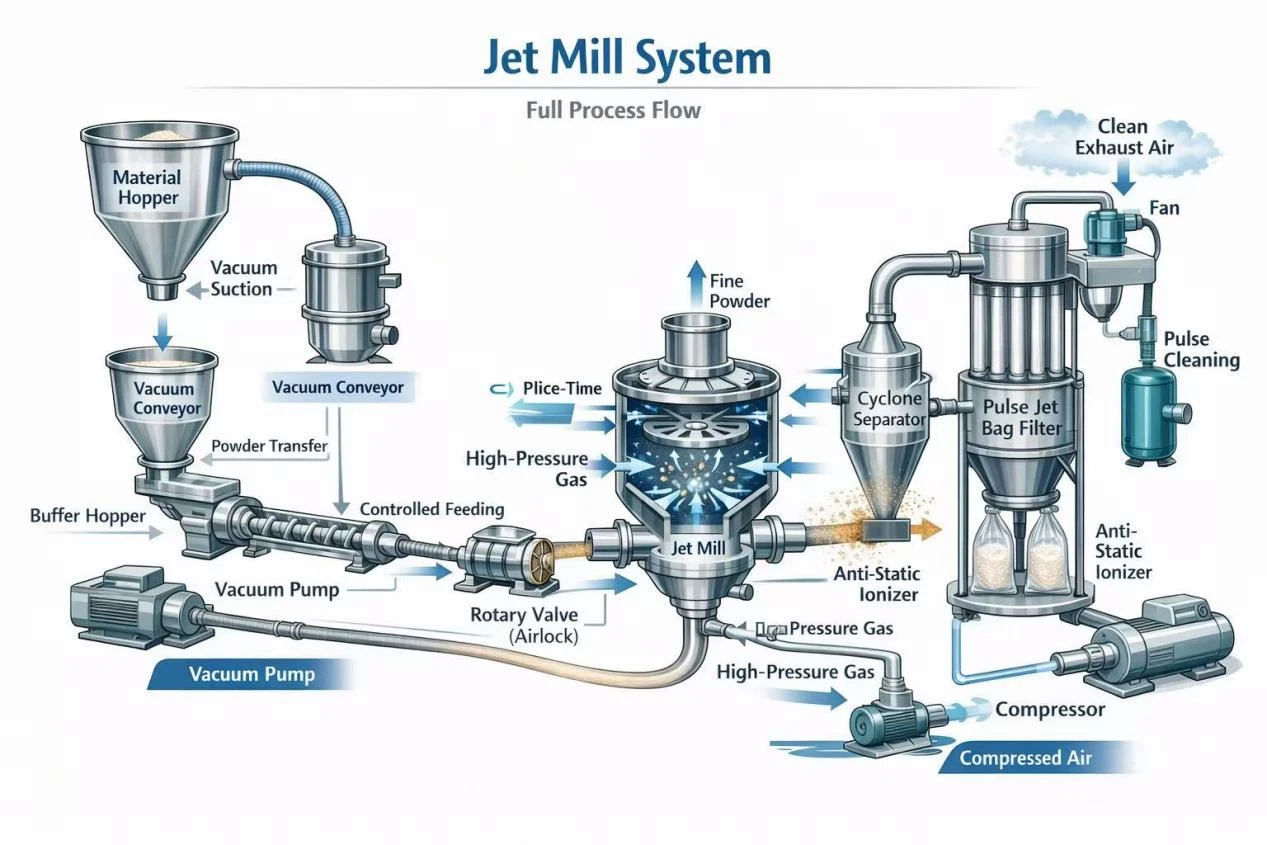
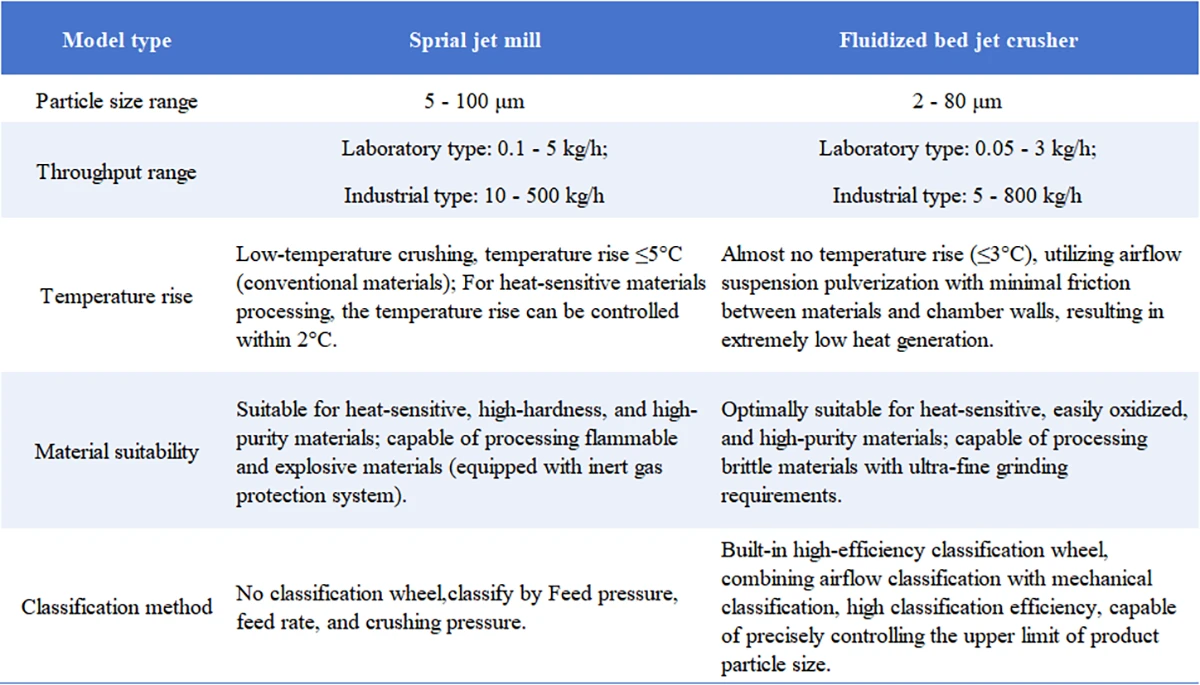
There are two common types of air jet mills: spiral and opposed. I will explain the differences between them to you from the following aspects and help you make a judgment.
Comparison of Production and Internal Structure
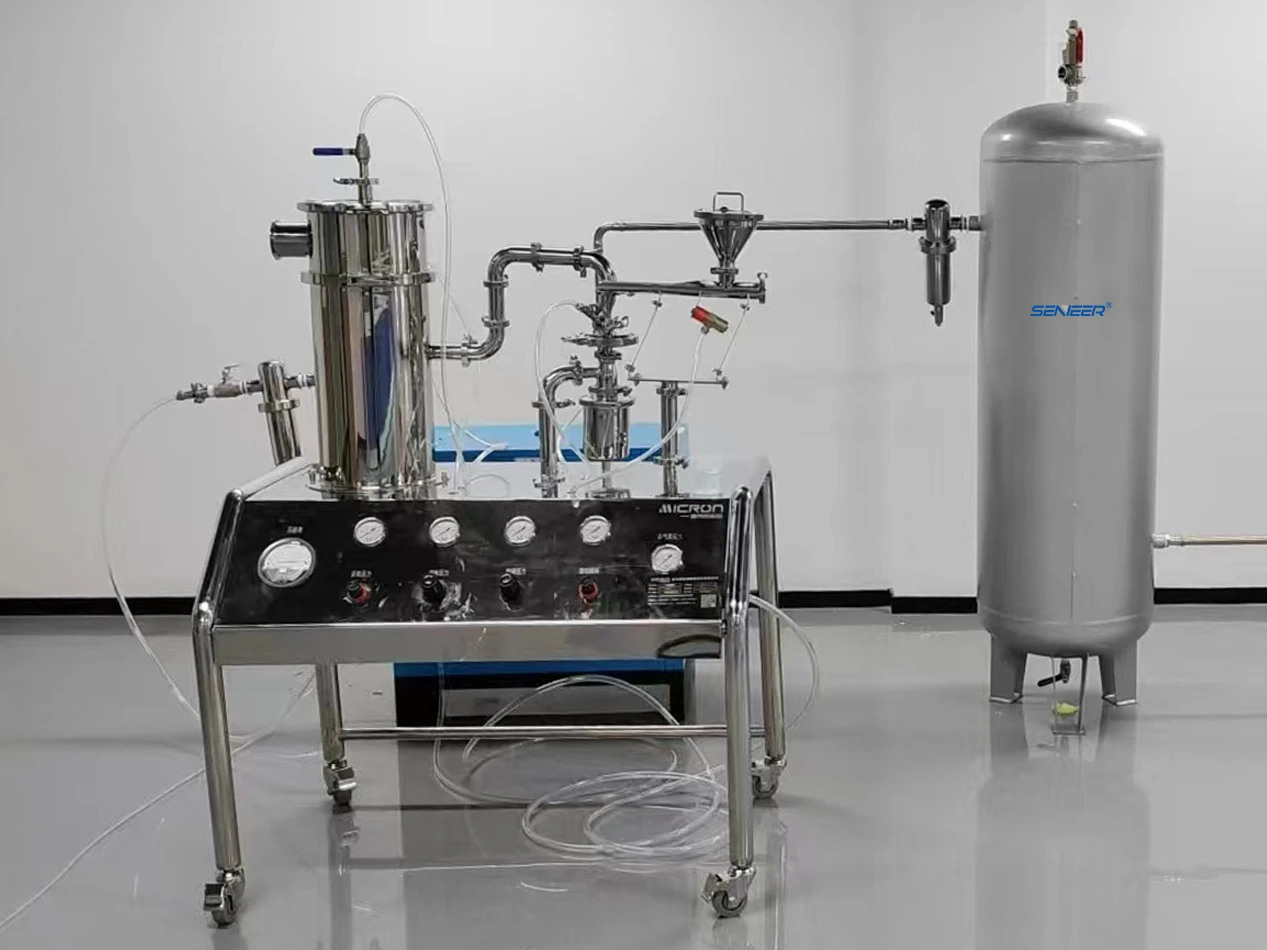
Sprial jet mill(Data By SSJ 400)
The Spirial jet mill requires feed particles smaller than 2 mm. However, due to the feed venturi tube’s diameter limitations and negative pressure feeding characteristics, the actual particle size tends to be smaller. The mill achieves a grindability range of 2-75 microns (adjustable), ensuring approximately 90% of particles (D90) are below 10 microns. Weighing around 200 kg, this main unit delivers a production capacity of 50-120 kg. It is particularly suitable for applications requiring output below 100 kg.
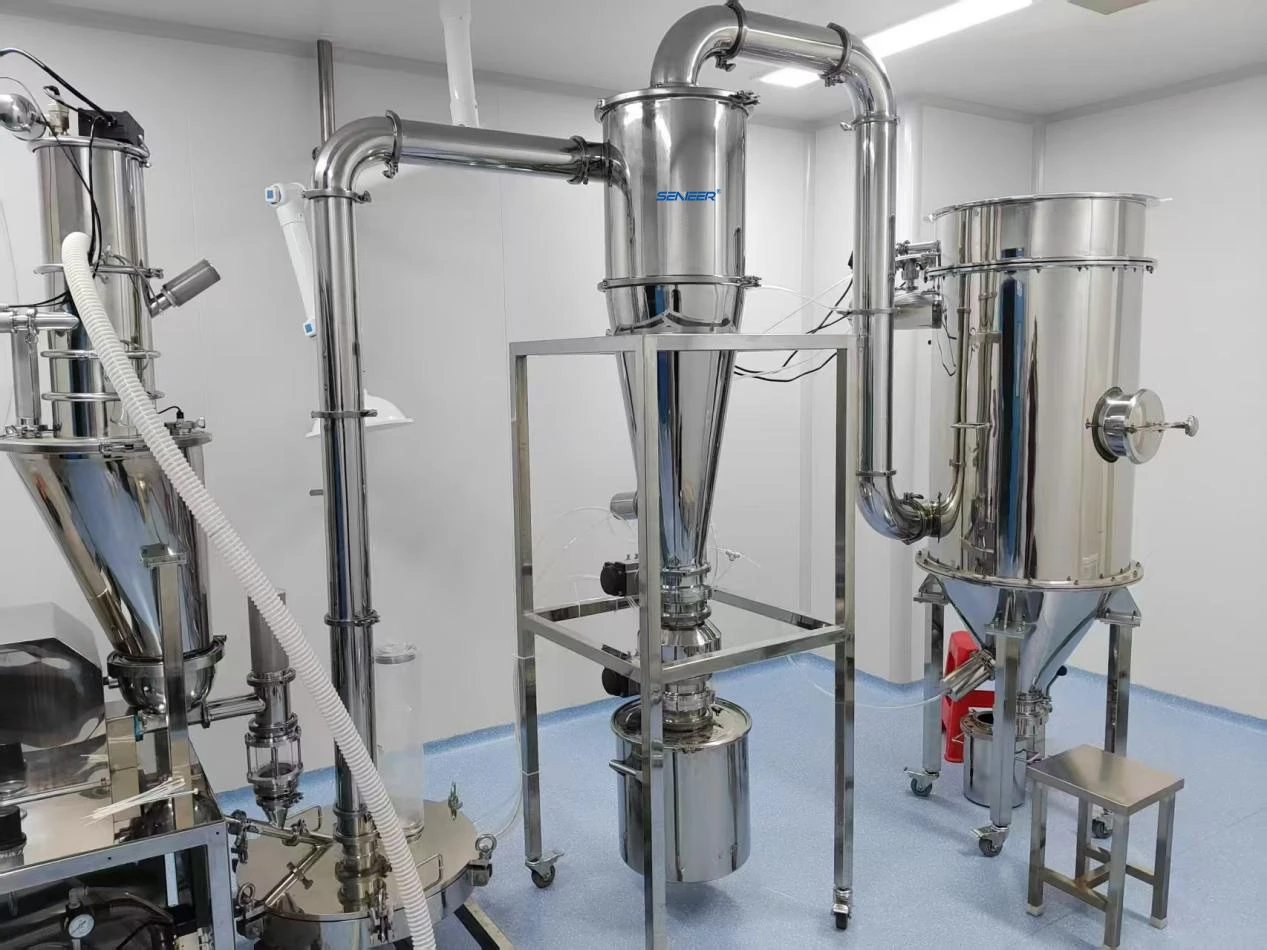
Fluid bed opposed jet mill(Data By SOJ 10)
Fluid bed opposed jet mill requires a feed particle size of less than 3 mm, though slightly larger particle sizes are allowed. Its grinding particle size ranges from 5 to 100 microns (adjustable), and the equipped high-efficiency classifying wheel features high classification efficiency, enabling precise control over the upper limit of product particle size. The material can meet the requirement of D90<10μm.The main unit of the equipment weighs approximately 400 kg, with a production capacity of 50 to 200 kg per hour, making it most suitable for large-scale production scenarios with an output of over 100 kg. Additionally, this equipment occupies a relatively large area.
Precautions for maintenance
The Sprial jet mill’s structure consists of two CNC-machined steel plates, featuring seamless construction with no rotating components or dead zones. This design enables effortless disassembly and cleaning, fully complying with GMP and FDA standards.
Fluid bed opposed jet mill has the characteristic of high structural complexity. By enhancing the classification control capability, setting up an efficient classifier wheel based on material properties, and integrating airflow classification and mechanical classification technologies, the system achieves high classification efficiency and can precisely control the upper limit of product particle size. However, it is more troublesome in the subsequent cleaning process.
The discharge structure of the impeller air jet mill is labyrinth type, which is easy to retain a large amount of material and can not be cleaned.
The motor bearing of vertical impeller air jet mill is vertical structure, and the bearing oil pollution product has very high risk coefficient.
The grade motor is heavy, and the disassembly and cleaning is very inconvenient.
The classification impeller requires a motor for operation, which must be explosion-proof, and the wiring is relatively complicated.
At the bottom of the crusher, some material always remains uncrushed, resulting in significant waste and difficult cleaning.
In a word, the spiral jet mill performs well in terms of easy cleaning, compliance with standards, and meeting the requirements of small production volumes and small particle sizes; the fluid bed opposed jet mill has advantages in feed particle size and maximum production capacity, but has problems such as cleaning dead corners and complex operation.
When You Are Not Sure, Do Not Guess
Jet mill selection is a technical decision, not a catalog choice.
Providing material information and process requirements allows engineers to recommend a suitable configuration and reduce project risk.